When Is Intravenous Dental Sedation Recommended?
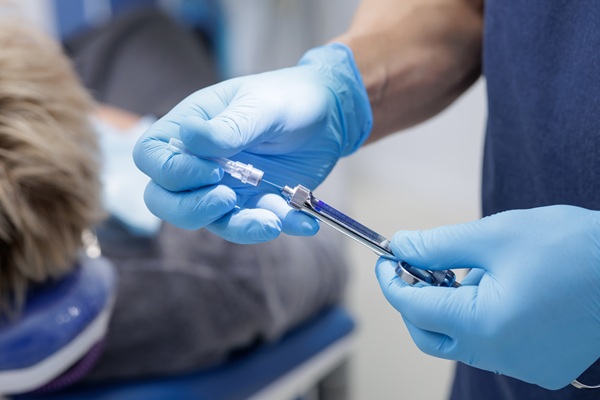
Dental sedation is a form of medication that allows the patient to feel more relaxed and experience less discomfort during dental treatment. Intravenous dental sedation refers specifically to a sedative medication that is administered intravenously (through an IV).
The ideal candidate for intravenous dental sedation
There are many benefits to intravenous dental sedation. It is a stronger form of dental sedation that allows the patient to experience less pain and ease their anxiety during treatment. The following is a review of when a dentist may recommend intravenous dental sedation, rather than oral sedation or nitrous oxide.
More extensive dental procedures
As mentioned, intravenous dental sedation is stronger than nitrous oxide (laughing gas) and oral sedation. Therefore, it is typically used for procedures that are more extensive and invasive and could potentially cause more discomfort. This includes procedures that require an incision into the gums, such as wisdom tooth extraction and dental implant placement. Less invasive procedures, such as a deep dental cleaning, do not require intravenous dental sedation.
Patients with dental anxiety or phobia
Patients who have dental anxiety or dental phobia may benefit more from intravenous dental sedation than oral sedation or nitrous oxide, regardless of how extensive the dental procedure is. For patients with severe dental phobia, they may still feel anxious during oral sedation or nitrous oxide, as they are more conscious and aware during treatment. With intravenous dental sedation, the patient feels sleepy and is less aware and less conscious, although they are not technically “knocked out” unless general anesthesia is administered.
Oral surgical procedures
If oral surgery is necessary, then intravenous dental sedation is likely necessary, especially if the oral surgery is performed by an oral surgeon and not a general dentist. This ensures that the patient does not experience much, if any, discomfort. For more invasive procedures, such as jaw surgery, general anesthesia may be used rather than the milder form of intravenous dental sedation that is known as “twilight.” Intravenous sedation during an oral surgery procedure often eases the mind of the patient before the procedure, as they know that they are not going to experience much discomfort during the procedure.
Patients who are unable or unwilling to take pills or nitrous oxide
Oral sedation and nitrous oxide are recommended for less invasive procedures. However, some patients may have a preference for stronger dental sedation administered intravenously, such as patients who have dental phobia. In some instances, a dentist may allow for the use of intravenous dental sedation for less invasive procedures, such as a deep dental cleaning, if the patient is unwilling or unable to go through the procedure without intravenous dental sedation.
Discuss your dental sedation treatment options with a dentist
If you are considering dental sedation to help with pain and anxiety management, then we encourage you to call our team or send us a message today. We are glad to discuss dental sedation options with you and arrange a time for a dental check-up and consultation visit at our dental practice.
Are you considering dental sedation in the Tustin area? Get more information at http://www.jsmimplantsanddentistry.com.
Check out what others are saying about our services on Yelp: Dental Sedation in Tustin, CA.
Related Posts
All-on-4® can help patients replace a full arch of missing teeth with a stable implant-supported restoration. Patients who explore full-arch tooth replacement may also hear the term All-on-X and wonder whether it means the same thing. Both options can restore chewing function, improve smile appearance, and create a more secure alternative to traditional removable dentures.…
We are committed to providing quality service to residents located In the Tustin, CA area. Our website has additional information about the following topics: Dentist, Family Dentist, Emergency Dentist, Kid-Friendly Dentist, Teeth Whitening, Dental Crowns, Dental Bridges, Dental Fillings, Dental Bonding and Gum Disease Treatment.
TMJ treatment can help reduce jaw pain, stiffness, clicking, and other symptoms that make everyday activities uncomfortable. The right approach depends on the cause and severity of the problem. A dentist can evaluate jaw movement, bite alignment, and muscle tension to determine which care options may be most effective. Understanding what treatment and recovery may…